What LoLTheory's Overlay Does
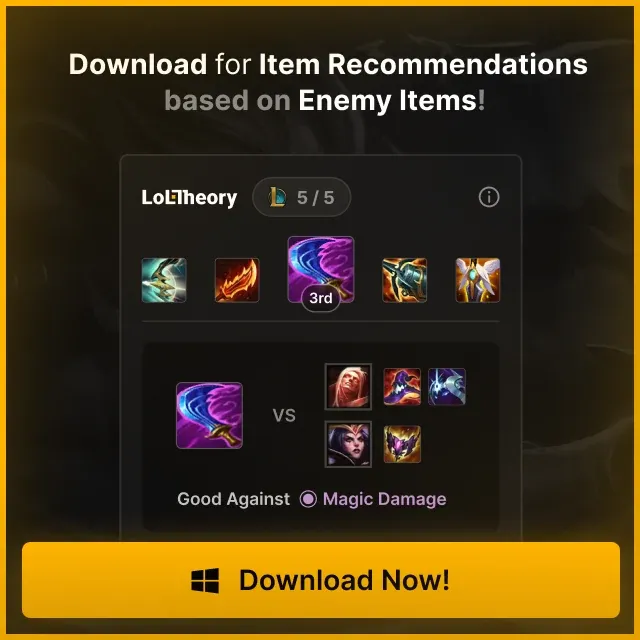
LoLTheory's in-game overlay recommends items based on what the enemy team is actually building, updating every time someone makes a purchase. The enemy support finishes Frozen Heart and their jungler completes an armor item? Armor penetration gets weighted higher because the effective enemy armor profile just shifted.
The recommendations account for your runes, summoner spells, current items, and skill order.
No major tool does this. Most give you a build at game start and leave you on your own.
Why Win Rate Data Lies to You
Most recommendation tools rely on item win rates. The problem is that win rate data is systematically biased in ways that push you toward bad decisions.
Three biases worth knowing:
The Mejai's Problem. Mejai's Soulstealer shows roughly 80% win rate. Not because it's broken, but because nobody finishes it in a game they're losing. Subtler versions of this affect dozens of items. Any "win more" item gets its win rate inflated.
The One-Trick Tax. That off-meta item with a suspiciously high win rate? It's mostly bought by one-tricks with thousands of games. They'd win with almost anything. The item isn't good. The players are.
The Zhonya's Paradox. Zhonya's Hourglass shows a terrible win rate because you buy it when you're desperate. The item is doing its job, but the data says it's bad because the games where you need it are already going poorly.
Riot has acknowledged this directly: "Winrate has long been an unreliable stat for judging an item's power because purchase timings and champion selection so heavily biased these numbers."
LoLTheory's model adjusts for all three. Gold differences so snowball items aren't overvalued, player champion skill so meta builds aren't undervalued, and enemy matchups so defensive choices get fair consideration. The goal is to isolate each item's actual effect from the context it's purchased in.
An Overlay That Adapts While You Play
The overlay updates every time an enemy purchases something. Not between games. Not at loading screen. During the game.
The model evaluates your full context: runes, summoner spells, current items, skill order. Armor penetration is evaluated based on how much armor the enemy is actually building, not just "they have a tank."
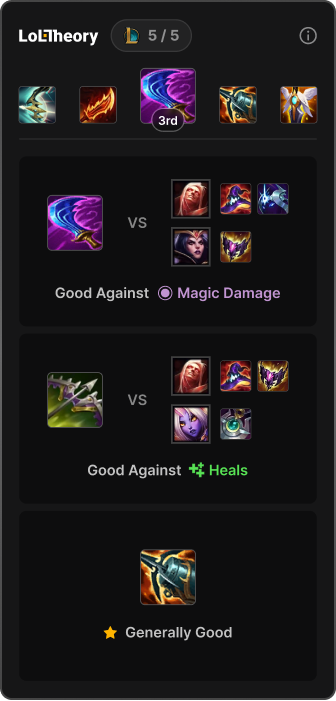
Each card tells you not just what to buy but why: "Good Against → Magic Damage," "Good Against → Heals," "Generally Good." You didn't have to notice the purchase, do the math, or alt-tab.
It Starts Before the Game Does
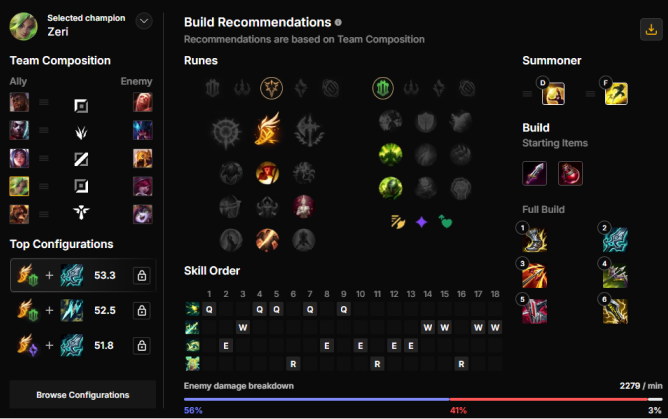
The overlay isn't the whole product. Before you load in, LoLTheory recommends a full build package: runes, items, summoner spells, skill order, optimized together for your specific matchup. Not runes from one source, items from another. One model, one recommendation, calculated as a unit.
It also recommends champions and bans in champion select based on both teams' draft. The in-game overlay continues that logic into the match, adjusting as the game develops.
For the full picture, see What is LoLTheory?
Try it in your next game. Champion select features are fully free, and the in-game overlay includes a free tier. Download LoLTheory.